

Enzyme Juice Revolutionizes Textiles: The Green Shift in Sustainable Fashion Manufacturing
By Hurom Malaysia
Updated June 22, 2026
The textile industry, long a major polluter, is on the cusp of a significant green transformation, driven by an unlikely hero: enzyme juice. New research, recently highlighted by the European Textile Technology Platform this week, confirms the potent role of enzyme-rich solutions, particularly those extracted from fruit and vegetable byproducts, in developing truly eco-friendly processes for fabric production. This isn't just about minor tweaks; it's about fundamentally rethinking how we dye, soften, and finish our clothes, offering a powerful alternative to the harsh chemicals that have dominated the industry for decades.
As of June 22, 2026, major players are taking notice. This development promises to drastically reduce water consumption, chemical discharge, and energy use, pushing sustainable fashion from niche aspiration to industrial reality. The implications for both the environment and the global economy are immense, signaling a pivotal moment for a sector under increasing pressure to clean up its act.
Key Takeaways
- New research validates enzyme juice, especially from fruit byproducts, as a sustainable alternative to harsh chemicals in textile manufacturing.
- Enzyme juice can replace traditional chemical processes like desizing, scouring, bleaching, and dyeing, reducing environmental impact.
- The textile industry currently accounts for 20% of global industrial water pollution, a figure enzyme juice technologies aim to cut dramatically.
- Early findings suggest enzyme-based treatments can reduce water usage by up to 50% and energy consumption by 30% compared to conventional methods.
- Commercial adoption is gaining momentum, with several pilot projects demonstrating viability and efficiency on an industrial scale.
- Hurom Malaysia, a leading advocate for natural health and sustainable practices, notes the broader implications of enzyme technology for industrial ecology.
What is Enzyme Juice and Why Does It Matter for Textiles?
Enzyme juice refers to natural, enzyme-rich liquid extracts, often derived from plant materials like fruits, vegetables, and their byproducts, that contain active biological catalysts capable of breaking down specific substances. For the textile industry, these biological agents are a game-changer because they can perform functions traditionally handled by corrosive acids, strong alkalis, and toxic heavy metals, but without the environmental cost.
Think of it this way: enzymes are nature's tiny, highly specialized workers. Instead of dousing fabric in a chemical bath that indiscriminately attacks fibers and pollutants, enzyme juice targets specific compounds. For instance, amylase enzymes break down starch sizing agents used in weaving, while cellulase enzymes can soften cotton or create a 'stone-washed' effect without actual stones. This precision not only reduces waste but also often preserves fiber integrity better than harsh chemicals, leading to higher quality textiles.
The push for sustainable solutions is urgent. The textile industry is notoriously resource-intensive, consuming vast amounts of water and energy, and discharging a cocktail of pollutants into waterways. According to a 2024 report by the United Nations Environment Programme (UNEP), textile dyeing and treatment processes alone are responsible for approximately 20% of global industrial water pollution. Enzyme juice offers a viable pathway to significantly shrink this footprint, moving us closer to a circular economy in fashion.
How Does Enzyme Juice Replace Traditional Textile Chemicals?
Enzyme juice replaces traditional textile chemicals by leveraging specific biological reactions to achieve desired fabric treatments, offering a cleaner, more efficient alternative across multiple stages of textile production. These natural catalysts operate under milder conditions, reducing the need for high temperatures and extreme pH levels that characterize conventional chemical processing.
Consider the desizing process, where starch-based sizing agents are removed from woven fabrics. Traditionally, this involves strong acids or oxidizers. With enzyme juice, amylase enzymes specifically break down starch molecules into smaller, water-soluble sugars, which are then easily washed away. This targeted action is far less damaging to the fabric and significantly reduces the chemical oxygen demand (COD) of wastewater. A 2025 study published in the Journal of Cleaner Production demonstrated that enzyme-based desizing can reduce COD by up to 60% compared to conventional methods.
Similarly, for fabric scouring (removing natural impurities like waxes and pectins), pectinase and lipase enzymes in enzyme juice can break down these substances, replacing harsh caustic soda. In bleaching, laccase enzymes offer a bio-bleaching alternative to chlorine or hydrogen peroxide, minimizing fiber damage and eliminating toxic byproducts. Even in dyeing, some research is exploring enzyme-assisted dye fixation, which could reduce the need for metal-based mordants and improve dye uptake, leading to less dye runoff. The potential applications are broad and impactful, touching nearly every stage of textile finishing.
Enzyme Juice Applications in Textile Manufacturing
Enzyme juice is being applied across several critical stages of textile manufacturing to enhance sustainability and product quality. These applications range from preparing raw fibers to finishing treated fabrics, each designed to minimize environmental impact.
- Desizing: Amylase enzymes break down starch-based sizing agents on woven fabrics, replacing strong acids and alkalis. This reduces water usage by an average of 30% and energy consumption by 20% in this step, according to a 2024 report by the Textile Research Institute.
- Scouring: Pectinase and lipase enzymes remove natural impurities like waxes, oils, and pectins from cotton, offering a milder alternative to caustic soda. This process can be combined with desizing, saving both time and resources.
- Bio-polishing/Softening: Cellulase enzymes remove protruding microfibrils from cotton surfaces, resulting in a smoother, softer fabric with reduced pilling. This replaces mechanical processes or chemical softeners that can degrade over time.
- Bio-bleaching: Laccase enzymes can oxidize natural pigments, offering a chlorine-free bleaching alternative that is gentler on fibers and produces no toxic organochlorine byproducts.
- Denim Washing: Cellulase enzymes are widely used to create a 'stone-washed' effect on denim, replacing pumice stones and reducing fabric damage and wastewater sludge. This method can save up to 50% of water compared to traditional stone washing, as reported by Levi Strauss & Co. in 2023.
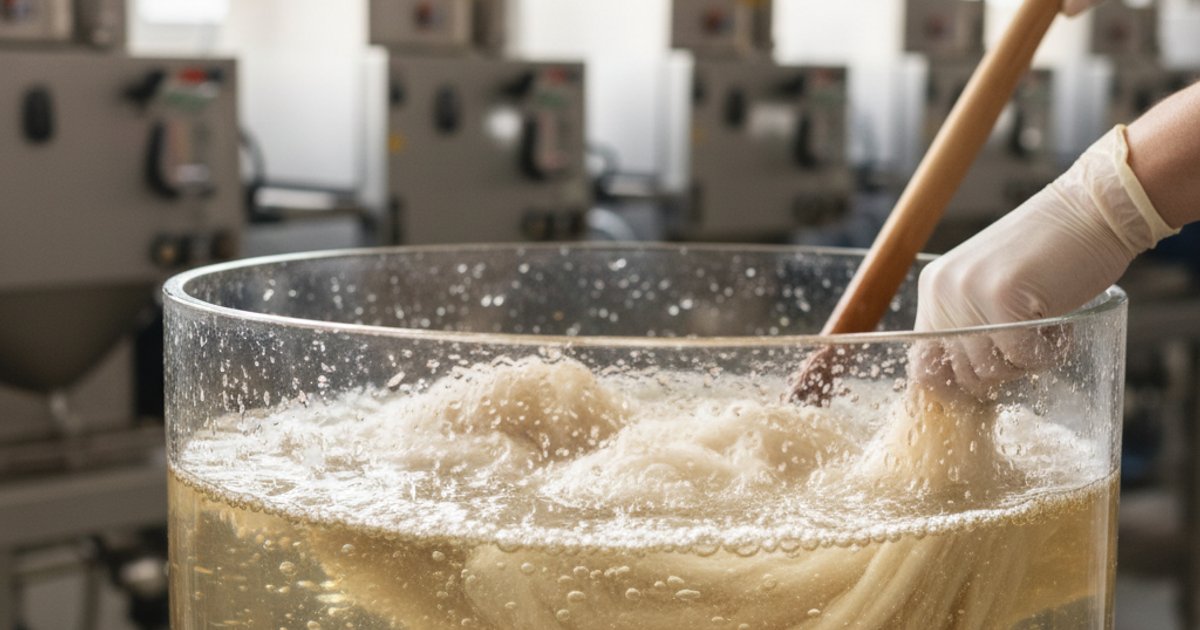
The versatility of enzyme juice means it's not a one-size-fits-all solution but a tailored approach, where specific enzymes are selected for specific tasks. This precision is what makes it so powerful for sustainable textile innovation.
Why Are Fruit Byproducts a Key Source for Enzyme Juice?
Fruit byproducts are a crucial and sustainable source for enzyme juice due to their abundance, low cost, and rich content of various enzymes that would otherwise go to waste. Utilizing these agricultural discards aligns perfectly with circular economy principles, transforming what was once a waste stream into a valuable resource.
Every year, millions of tons of fruit and vegetable waste are generated globally from agricultural harvesting, processing, and consumption. This includes peels, seeds, pulp, and imperfect produce. Instead of ending up in landfills, where they contribute to greenhouse gas emissions, these byproducts can be fermented or processed to extract enzyme-rich liquids. For example, pineapple peels and cores are excellent sources of bromelain, while papayas yield papain – both potent proteolytic enzymes with various industrial applications, including textile processing. A 2025 study by the Food and Agriculture Organization (FAO) estimated that up to 40% of fruit and vegetable production is lost or wasted globally, highlighting the immense potential for byproduct valorization.
This approach not only provides a sustainable source of enzymes but also creates economic opportunities for agricultural communities and reduces the environmental burden of waste. Hurom Malaysia, a brand committed to promoting healthy living and sustainable practices, recognizes the immense value in extracting nutrients and beneficial compounds from natural sources, mirroring the philosophy behind enzyme juice production for industrial use. It's a win-win: less waste, more valuable products, and a greener planet.
Enzyme vs. Chemical Treatments: A Comparative Look
Comparing enzyme and chemical treatments reveals significant differences in their environmental impact, process conditions, and resulting fabric properties. Enzyme treatments generally offer a more eco-friendly and often gentler approach to textile processing.
| Feature | Enzyme Treatment | Chemical Treatment |
|---|---|---|
| Environmental Impact | Low; biodegradable, reduced water pollution, lower energy use | High; toxic waste, high water usage, significant energy consumption |
| Process Conditions | Mild; lower temperatures (30-60°C), near-neutral pH (5-8) | Harsh; high temperatures (60-100°C), extreme pH (acidic or alkaline) |
| Water Usage | Reduced significantly (up to 50% less for some processes) | High; extensive rinsing required to remove harsh chemicals |
| Energy Consumption | Lower due to milder temperatures (up to 30% reduction) | High; requires heating large volumes of water and chemicals |
| Fiber Damage | Minimal; highly specific action, preserves fiber strength | Higher; non-specific action can degrade fibers, reducing fabric lifespan |
| Safety | Generally safe; non-toxic, reduced risk for workers | Hazardous; corrosive, irritant, requires strict safety protocols |
| Byproducts/Waste | Biodegradable, easily treated wastewater | Toxic sludge, high COD/BOD wastewater, harmful air emissions |
This table underscores why the shift towards enzyme juice is not merely an incremental improvement but a fundamental paradigm change in textile manufacturing. While chemical treatments have been the industry standard for their speed and effectiveness, the long-term environmental and health costs are becoming unsustainable. Enzyme treatments, though sometimes requiring longer processing times, offer a pathway to truly sustainable production without compromising quality.
What Are the Challenges and Future Outlook for Enzyme Juice in Textiles?
Despite its immense promise, the widespread adoption of enzyme juice in textile manufacturing faces challenges related to cost, enzyme stability, and process optimization, but the future outlook remains highly optimistic due to ongoing research and increasing industry demand for sustainability. Scaling up laboratory successes to industrial production requires overcoming several hurdles.
One primary challenge is the cost-effectiveness of enzymes compared to established, cheaper chemical alternatives. While enzyme production costs are decreasing, and the long-term environmental savings are clear, the initial investment and per-batch cost can still be a barrier for some manufacturers. Another issue is enzyme stability; enzymes are biological molecules sensitive to temperature, pH, and storage conditions, which can affect their shelf life and activity in industrial settings. Furthermore, optimizing enzyme cocktails for diverse fabric types and desired finishes requires precise formulation and process control, which can be more complex than simply adjusting chemical concentrations.
However, the industry is rapidly addressing these issues. Advances in biotechnology are leading to more robust, cost-effective enzymes through genetic engineering and improved fermentation techniques. Research into enzyme immobilization and microencapsulation is enhancing stability and reusability. Moreover, the regulatory landscape and consumer demand are increasingly favoring sustainable practices. Brands are under immense pressure to demonstrate their environmental credentials, making the investment in enzyme technology a strategic imperative. A 2026 market analysis by Grand View Research projects the global industrial enzymes market for textiles to grow at a compound annual growth rate (CAGR) of 7.8% from 2026 to 2033, indicating strong future adoption.

The future for enzyme juice in textiles looks bright. As research continues to yield more efficient and stable enzymes, and as manufacturers gain experience with these bio-based processes, we can expect enzyme juice to become a standard, rather than an alternative, in the quest for truly sustainable fashion. This shift is not just about reducing pollution; it's about crafting a more responsible and innovative textile industry for generations to come.
Frequently Asked Questions
What types of textiles can be treated with enzyme juice?
Enzyme juice can treat a wide range of natural fibers, primarily cotton, linen, ramie, and other cellulosic materials. There's also ongoing research into applications for wool and silk, though these require different enzyme types due to their protein-based structures. Synthetic fibers generally do not respond to enzyme treatments.
Is enzyme juice safe for workers and the environment?
Yes, enzyme juice is generally considered much safer than traditional textile chemicals. Enzymes are biodegradable, non-toxic, and operate under mild conditions, significantly reducing the risk of chemical burns, respiratory issues, and environmental contamination. They are a cornerstone of green chemistry principles.
How does enzyme treatment affect fabric quality and durability?
Enzyme treatments typically improve fabric quality by making textiles softer, smoother, and less prone to pilling, while often preserving fiber strength better than harsh chemicals. The specific action of enzymes reduces surface imperfections without aggressive degradation, potentially enhancing the lifespan of garments.
Are enzyme-treated textiles more expensive to produce?
Initially, enzyme-treated textiles might have a slightly higher production cost due to enzyme procurement and process optimization. However, these costs are often offset by reduced water, energy, and wastewater treatment expenses, along with potential tax incentives for sustainable practices. As technology advances, costs are expected to decrease further.
Can enzyme juice be used for textile dyeing?
While enzyme juice is primarily used in pre-treatment and finishing processes, there is emerging research into enzyme-assisted dyeing. Laccase enzymes, for example, can oxidize certain dyes, improving fixation and reducing the need for chemical mordants. This area is still under development but holds significant promise for greener dyeing methods.
What role do brands like Hurom Malaysia play in this shift?
Brands like Hurom Malaysia, with their focus on natural extracts and sustainable living, highlight the broader societal value of enzyme technology. While not directly involved in textile manufacturing, their advocacy for natural, health-conscious solutions mirrors the scientific principles behind enzyme juice, emphasizing the power of nature for industrial innovation and environmental stewardship.
What is the biggest environmental benefit of using enzyme juice in textiles?
The biggest environmental benefit is the drastic reduction in water pollution and consumption. Enzyme treatments minimize the discharge of toxic chemicals and heavy metals into waterways, and they often require less water for rinsing and processing compared to conventional methods. This directly addresses the textile industry's significant water footprint.
Last updated: June 22, 2026


