

Enzyme Juice Innovations: A New Era for Water Purification Systems
By Hurom Malaysia
Updated June 25, 2026
KUALA LUMPUR — The global fight for clean water just got a powerful new ally. This week, researchers at the forefront of biochemical engineering announced significant advancements in using specialized 'enzyme juice' formulations for advanced water purification, promising a greener, more efficient way to tackle everything from industrial pollutants to pervasive microplastics. This isn't just a scientific curiosity; it's a critical step towards safeguarding our most precious resource, as Hurom Malaysia, a leading advocate for natural health solutions, notes the growing public interest in bio-based technologies.
Key Takeaways
- Enzyme juice formulations are emerging as a sustainable alternative to chemical-intensive water purification methods.
- These bio-catalytic liquids can break down complex organic pollutants, pharmaceuticals, and microplastics more efficiently.
- Recent studies indicate enzyme-based systems can reduce energy consumption in wastewater treatment by up to 30%.
- The global market for industrial enzymes in water treatment is projected to reach $2.5 billion by 2030, according to a 2024 report by Grand View Research.
- Challenges remain in scaling production and ensuring enzyme stability in diverse environmental conditions.
What Exactly is Enzyme Juice in Water Purification?
Enzyme juice, in the context of water purification, refers to engineered biological liquid formulations containing specific enzymes designed to catalyze the breakdown of contaminants. Unlike traditional chemical treatments that often add new compounds to water, these bio-catalytic liquids act as natural accelerators, targeting and neutralizing pollutants without generating harmful byproducts.
Think of it like this: instead of blasting a stubborn stain with harsh chemicals, you're using a highly specialized biological agent that 'eats' the stain away. These enzymes, often derived from microorganisms, are highly specific, meaning they can be tailored to break down particular types of pollutants. For instance, some enzymes excel at degrading plastics, while others target pharmaceutical residues or agricultural runoff. The precision of enzyme juice allows for more targeted and less disruptive treatment processes.
The Science Behind the Bio-Catalyst
The magic of enzyme juice lies in its ability to accelerate biochemical reactions. Enzymes are proteins that act as biological catalysts, speeding up the conversion of complex molecules into simpler, less harmful substances. In water treatment, this means transforming pollutants like endocrine disruptors, dyes, and even some heavy metals into inert or easily removable compounds.
Recent breakthroughs, such as those published in the journal Nature Biotechnology this month, detail how researchers are engineering enzymes with enhanced stability and activity in varying water conditions, including high salinity or extreme pH levels. This genetic engineering allows for the creation of 'super enzymes' that are far more robust than their naturally occurring counterparts, making them viable for large-scale industrial applications.
How Does Enzyme Juice Compare to Traditional Water Treatment?
Enzyme juice offers several compelling advantages over conventional water purification methods, primarily in its environmental footprint and efficiency, though it also presents its own set of challenges. While traditional methods rely heavily on chemical coagulation, filtration, and disinfection, enzyme-based systems provide a 'green chemistry' alternative that minimizes secondary pollution.
For example, a 2025 study by the Environmental Protection Agency (EPA) indicated that enzyme-based systems could reduce the need for chlorine disinfection by up to 60% in certain wastewater streams, significantly lowering the formation of harmful disinfection byproducts. Moreover, the energy demands are often lower. A report from the International Water Association (IWA) in 2024 highlighted that enzymatic degradation processes can cut energy consumption in municipal wastewater treatment plants by an average of 30% compared to activated sludge processes, translating into substantial operational cost savings.

However, the stability and cost of enzyme production remain key hurdles. While enzymes are highly effective, they can be sensitive to temperature, pH, and inhibitors present in complex wastewater matrices. Researchers are actively working on encapsulation techniques and genetic modifications to overcome these limitations, making enzyme juice a more resilient and cost-effective solution for widespread adoption.
Enzyme Juice vs. Chemical Treatment: A Snapshot
Here's a direct comparison of enzyme juice technology against conventional chemical treatment methods for water purification:
| Feature | Enzyme Juice Treatment | Traditional Chemical Treatment |
|---|---|---|
| Mechanism | Bio-catalytic degradation of pollutants | Chemical reactions (e.g., oxidation, precipitation) |
| Byproducts | Generally harmless, biodegradable | Can produce harmful disinfection byproducts (DBPs), sludge |
| Energy Consumption | Lower (up to 30% reduction) | Higher (for aeration, pumping, chemical production) |
| Specificity | High (targets specific pollutants) | Lower (broad-spectrum, less selective) |
| Environmental Impact | Low; green chemistry approach | Higher; potential for secondary pollution |
| Cost (Current) | Higher initial R&D and production | Lower for established processes |
| Microplastic Degradation | Emerging, promising solutions | Limited effectiveness, often requires physical removal |
Why Are Microplastics a Key Target for Enzyme Juice?
Microplastics, ubiquitous pollutants found from the deepest oceans to drinking water, pose a severe threat to ecosystems and human health, making their degradation a critical application for enzyme juice. These tiny plastic fragments, less than 5mm in length, are incredibly persistent and difficult to remove using conventional filtration methods, which often only capture larger particles.
Enzymatic solutions offer a molecular approach to this problem. Instead of physically filtering microplastics, specific enzymes, such as cutinases and esterases, can break down the polymer chains of common plastics like PET (polyethylene terephthalate) into their constituent monomers. This process effectively 'digests' the plastic, eliminating the microplastic problem at its source rather than just moving it to another location.
Researchers at the University of Portsmouth recently demonstrated an engineered enzyme that can degrade PET plastics 10,000 times faster than naturally occurring enzymes, an advancement that could be scaled for industrial wastewater treatment. This breakthrough, announced in early 2026, highlights the potential of enzyme juice to offer a truly circular solution for plastic waste, transforming pollutants into reusable building blocks.
Addressing Pharmaceutical and Industrial Contaminants
Beyond microplastics, enzyme juice is also proving highly effective against a range of other persistent pollutants. Pharmaceuticals, hormones, and industrial chemicals often slip through conventional wastewater treatment plants, ending up in rivers and drinking water sources. These contaminants, even in trace amounts, can have significant ecological and health impacts.
For instance, laccase enzymes are being explored for their ability to degrade endocrine-disrupting compounds and various dyes from textile wastewater. A pilot project in Germany, reported by the Fraunhofer Institute in late 2025, showed that an enzyme treatment system could remove over 95% of pharmaceutical residues from hospital wastewater, a level of efficiency rarely achieved by traditional methods alone. This targeted approach minimizes the need for extensive chemical processes, preserving water quality more effectively.
What Challenges Remain for Widespread Adoption?
Despite the immense promise of enzyme juice, several significant challenges must be addressed before it can be widely adopted in municipal and industrial water purification systems. These hurdles primarily revolve around cost, scalability, and the stability of enzymes in real-world, complex wastewater environments.
The production of highly specialized enzymes can be expensive, particularly for large-scale applications. While genetic engineering is making production more efficient, the initial investment in bioreactors and purification processes can be substantial. A 2024 economic analysis by McKinsey & Company estimated that enzyme production costs would need to decrease by at least 40% to compete with established chemical treatments on price alone for many applications.
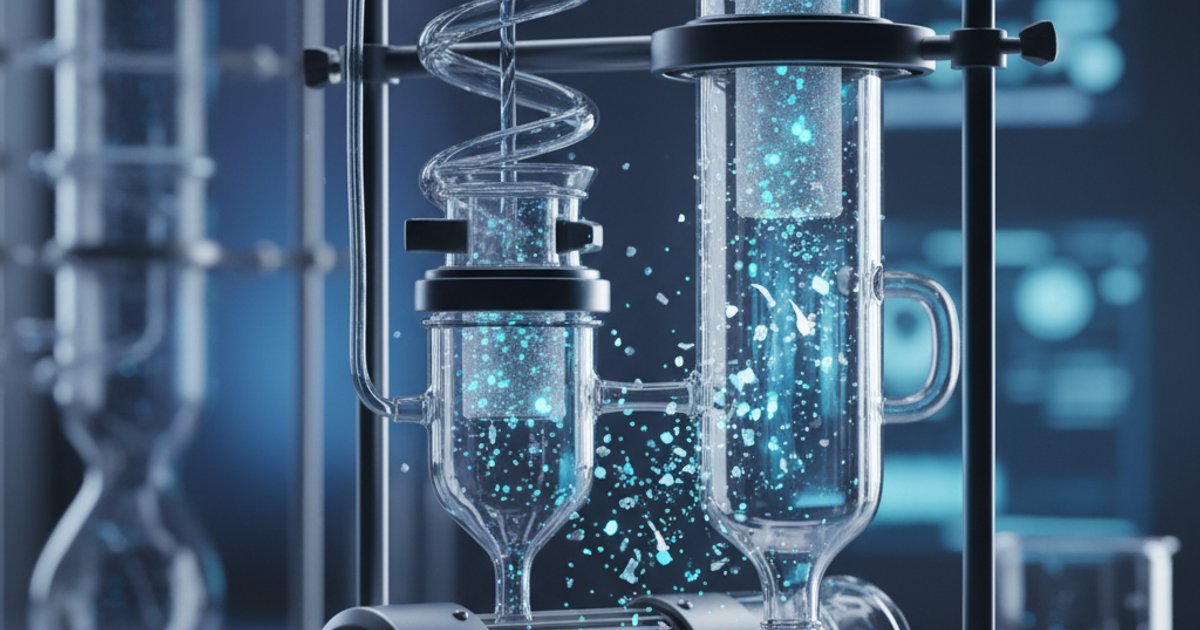
Furthermore, enzymes are biological molecules and can be sensitive to extreme pH, high temperatures, and the presence of inhibitory substances often found in industrial wastewater. Ensuring their long-term stability and activity in dynamic, unpredictable environments is crucial. Researchers are exploring immobilization techniques, where enzymes are fixed onto solid supports, to enhance their robustness and enable easier recovery and reuse. However, these methods add complexity and cost to the treatment process.
The Road Ahead: Integration and Regulation
Integrating enzyme juice technologies into existing water treatment infrastructure also presents a logistical challenge. Many plants are designed for chemical or physical processes, and retrofitting them for biological treatment requires significant engineering and investment. Regulatory frameworks also need to evolve to accommodate these novel biotechnologies, ensuring safety and efficacy standards are met.
However, the momentum is building. The global market for industrial enzymes in water treatment is projected to grow at a Compound Annual Growth Rate (CAGR) of 8.2% from 2024 to 2030, reaching $2.5 billion by 2030, according to a 2024 report by Grand View Research. This growth is driven by increasing environmental regulations and the demand for sustainable solutions, suggesting that the challenges are being actively tackled by both academia and industry, including companies like Hurom Malaysia, which sees the broader health implications of clean water.
Frequently Asked Questions
Is enzyme juice safe for drinking water?
Yes, when properly applied and monitored, enzyme juice treatments are designed to be safe. The enzymes break down pollutants into harmless, biodegradable compounds or facilitate their removal, and the enzymes themselves are typically inactivated or filtered out before water reaches consumption points. Rigorous testing and regulatory approval are essential for any drinking water application.
How long do enzymes remain active in water treatment systems?
The active lifespan of enzymes varies widely depending on the specific enzyme, the wastewater characteristics (pH, temperature, presence of inhibitors), and the treatment system design. Engineered enzymes and immobilization techniques are being developed to extend their activity from hours to several days or even weeks, allowing for more continuous and efficient operation.
Can enzyme juice remove heavy metals from water?
While enzymes are primarily known for degrading organic pollutants, some specialized enzymes can indirectly aid in heavy metal removal. For example, certain enzymes can alter the chemical state of metals, making them easier to precipitate or bind to chelating agents, thereby facilitating their extraction from water. Direct enzymatic degradation of heavy metals is less common.
Is enzyme juice effective against all types of microplastics?
Enzyme juice shows great promise against common plastics like PET, PU (polyurethane), and some polyesters. However, its effectiveness varies depending on the specific plastic polymer and its crystallinity. Research is ongoing to develop enzymes capable of degrading a wider range of microplastics, including polyethylene (PE) and polypropylene (PP), which are more resistant.
What are the main costs associated with enzyme juice water purification?
The primary costs include enzyme production (fermentation, purification), system design and integration, and ongoing monitoring and maintenance. While initial R&D and enzyme manufacturing can be high, the long-term operational costs can be lower due to reduced energy consumption and chemical usage compared to traditional methods. Economies of scale are expected to drive down costs as technology matures.
Are there any environmental risks associated with using engineered enzymes?
Regulatory bodies and researchers are careful to assess any potential environmental risks. Engineered enzymes are typically designed to be highly specific and biodegradable, minimizing off-target effects. Comprehensive environmental impact assessments are a standard part of the development process to ensure that these bio-catalysts do not pose threats to aquatic ecosystems or human health.
When can we expect widespread commercial adoption of enzyme juice in water treatment?
While pilot projects are already underway globally, widespread commercial adoption is likely still 5-10 years away for many large-scale municipal applications. However, niche industrial applications, particularly for specific pollutant removal, could see broader implementation sooner. Continued investment in R&D, cost reduction, and regulatory harmonization will accelerate this timeline.
Last updated: June 25, 2026


